small, deep pitted scar
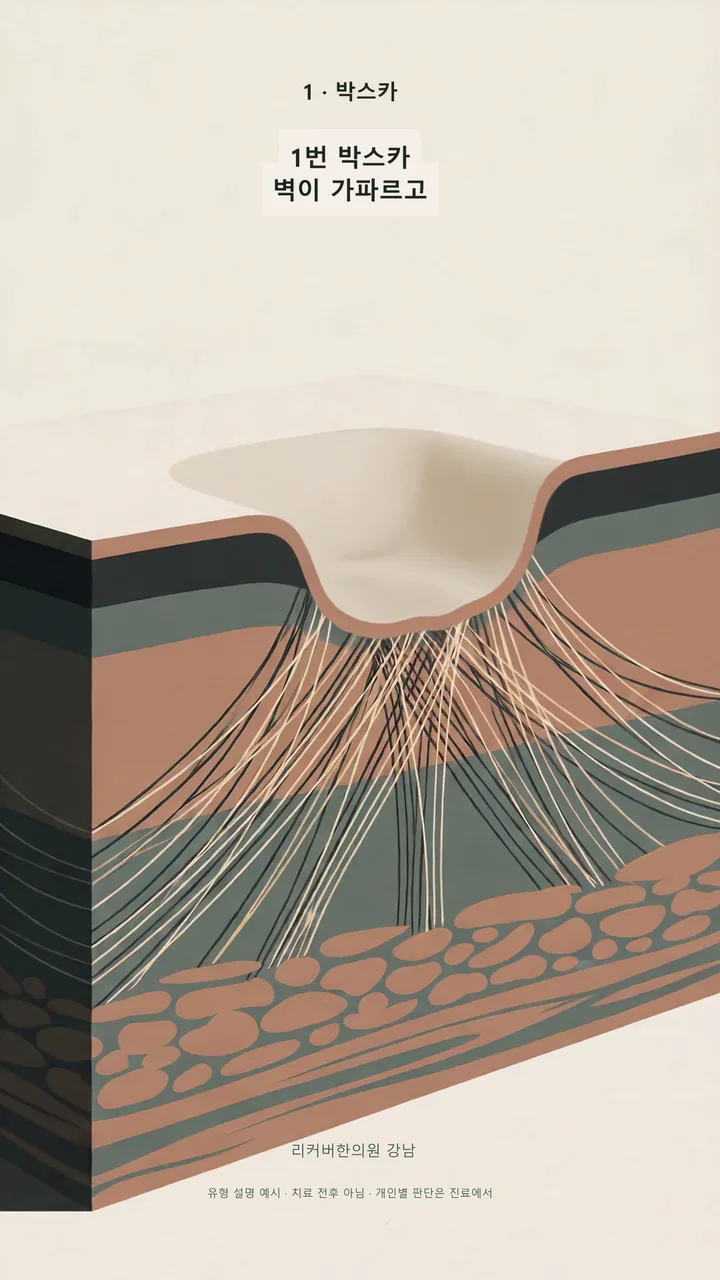
A narrow but deep scar requires checking the deeper edge and possible approach range beyond the surface.
acne / chickenpox
Home/Scar types
Scars that look different under lighting, small deep scars, and broad depressions are not read the same way. RECOVER separates form and skin response to organize what to approach now and what to review later.
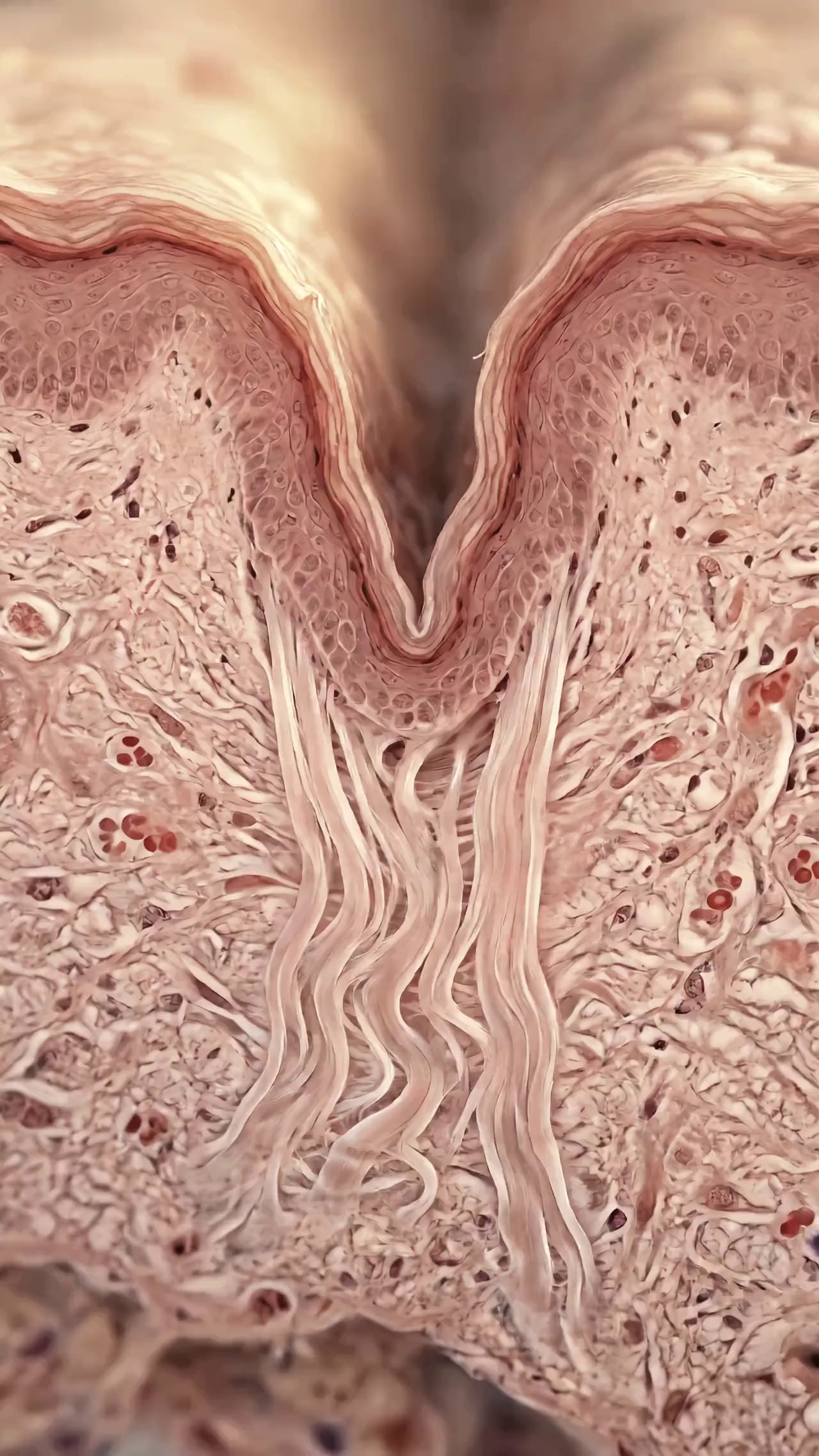
Pitted scars require review of not only surface shadow but also the pull direction beneath the skin and nearby skin response. This cross-section is an example map of depth, edge, and tethering direction checked during initial recovery planning.
Narrow deep pits, broad gentle tethering, sharp edges, red marks, and pigmentation require different sequencing. RECOVER separates what to approach now from what to review in stages.
A narrow but deep scar requires checking the deeper edge and possible approach range beyond the surface.
acne / chickenpox
When shadow changes by lighting and the depression looks broad, tethering and surrounding elasticity are reviewed together.
acne / trauma
When the edge is clear and the base looks flat, edge and depth are checked separately.
acne / chickenpox
Raised scars and keloids follow different criteria. Irritation response and edge spread are checked first to decide whether to start.
A firm raised scar within the wound boundary is checked first for irritation response and edge.
surgery / trauma
If the scar expands beyond the boundary, itches, or feels firm, starting conditions are reviewed carefully.
burn / tendency
If skin feels tight after burn or surgery, surrounding tension and movement are checked together.
burn / surgery
If redness lasts longer than indentation, sensitivity and calming criteria are reviewed first.
after acne / procedure
Brown or dark marks are reviewed with pigmentation response and sun-care criteria.
sun exposure / after procedure
Pale residual marks are not stimulated quickly; follow-up observation criteria are set first.
after procedure / burn
Scars are not classified by name alone. Depth, edge, tethering, redness, pigment, and sensitivity are read separately, and clinician review organizes the Saesalchim range and next comparison items.
SCAR PREDICT places observation points that are easy to miss onto one standard using recovery-planning records. Final judgment and treatment planning are decided by clinician review.
View first-visit RECOVER NOTE →