Fixed capture standard
Capture records with matched lighting, angle, and expression are kept as the baseline, with scar locations connected to 3D facial reference points.
Home / Method and criteria
RECOVER measures scars under consistent conditions and analyzes tethering patterns using the internal AI prediction program developed by our doctor. The doctor assesses tethering by palpation and determines treatment methods and order. Records help explain the treatment range and subsequent progress.
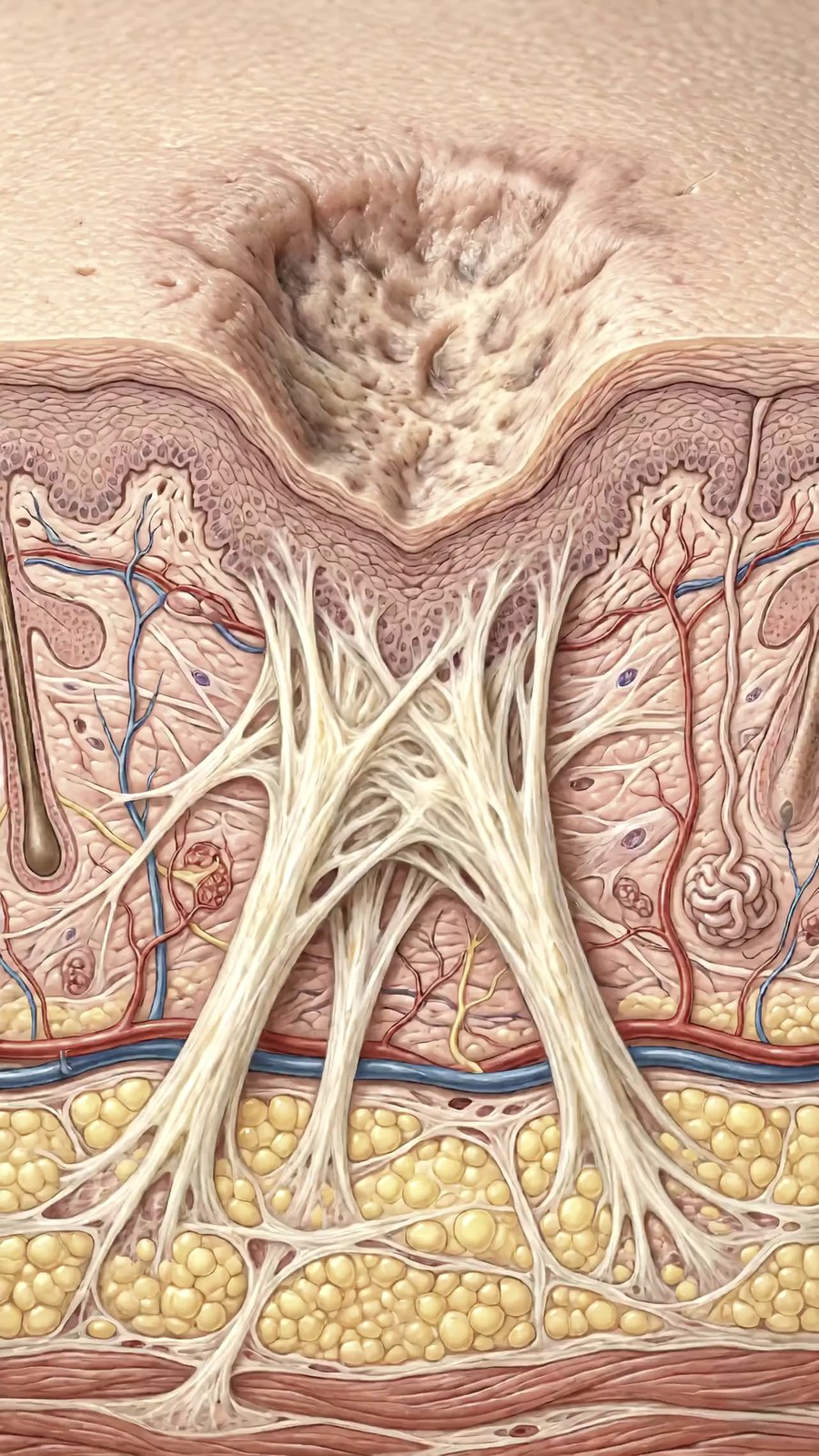
We record scar depressions under consistent conditions. The doctor examines the edges, tethering and skin response, then explains the treatment method and sequence using the examination and record. These are summarized in your scar 3D record.
Capture records with matched lighting, angle, and expression are kept as the baseline, with scar locations connected to 3D facial reference points.
AI marks separate pitted areas from redness and pigment, and clinician review defines the approach range.
The clinician checks and corrects marked borders and classifications, then uses the record to organize Saesalchim range, depth, and direction.
Scar location, structural reading, Saesalchim range, and items to review after 2 weeks, 1 month, and 3 months are kept in one recovery-planning record.
Priority areas are recorded by side and region so the same areas can be compared at the next visit.
Rather than viewing only the surface edge, subsurface tethering is visualized as a recovery-baseline reference map.
Ice-pick, rolling, and boxcar scars are organized separately from red marks and pigmentation on one screen.
Scar locations are linked to 3D facial reference points so the baseline note keeps track of the exact region.
Using the SCAR PREDICT record, the clinician rereads depth, edge, and tethering, then organizes Saesalchim range, depth, direction, and interval.
The record brings together measured surface depressions, the doctor’s assessment of edges and tethering, treatment methods and the next comparison points. Take it home with an explanation and compare again under consistent conditions at follow-up.
SCAR PREDICT uses AI-assisted markings and the recovery planning record to help clinicians re-read differences the eye can miss on one shared standard. The final judgment and the treatment plan are set by the clinician.
Saesalchim is a procedure that enters from beside the scar rather than covering it from above, to read the tethering beneath an atrophic scar. Its difference is not merely inserting a needle; it is deciding how far to enter and where to stop. Pitted scars require accurate layer reading and a limited, necessary range.
The approach begins beside the scar with needle angle and depth kept steady while tethering and skin response are checked. Even similar scars differ in direction and interval by pull range, edge, and base depth.
Subcision reaches the fibrous tethering that holds the floor of a pitted scar down and releases it. Saesalchim works the same layer, but enters beside the scar and takes its standard from adjusting depth, direction and spacing to the scar type and the skin response. What comes first is decided by reading the scar structure, not by the name of a procedure, and that order and range are recorded together in the 3D Scar Record.
Tethering beneath pitted scars, side entry beside the scar, and the 3D structure are reviewed as one mechanism from three viewpoints. The filling process continues in Recovery progresscontinues in
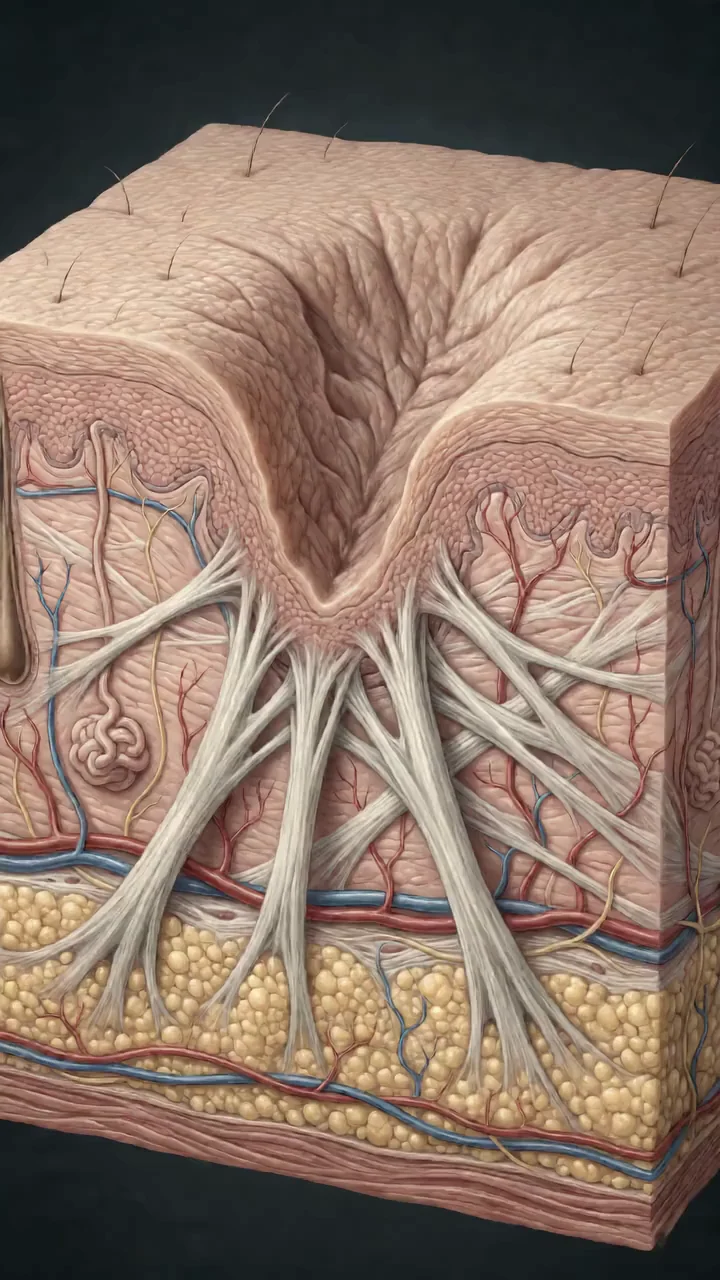
Rather than finishing in one step, response beneath the scar is reviewed in stages. Surface change is compared under the same conditions.
04 stage
Entry, check, response, comparison
Saesalchim enters beside the scar at an angle nearly parallel to the skin, checking tethering beyond the surface.
Tissue tension related to tethering is checked and the range is adjusted to skin condition. Later recovery response is recorded under the same conditions.
Subsurface response and redness are observed together. Before judging visible change, this stage checks whether progress can be compared consistently.
Surface change varies by person, so it is compared in stages under the same lighting and angle.
The need and interval for each stage are adjusted to skin condition.
RN · 01
Cross-section standard
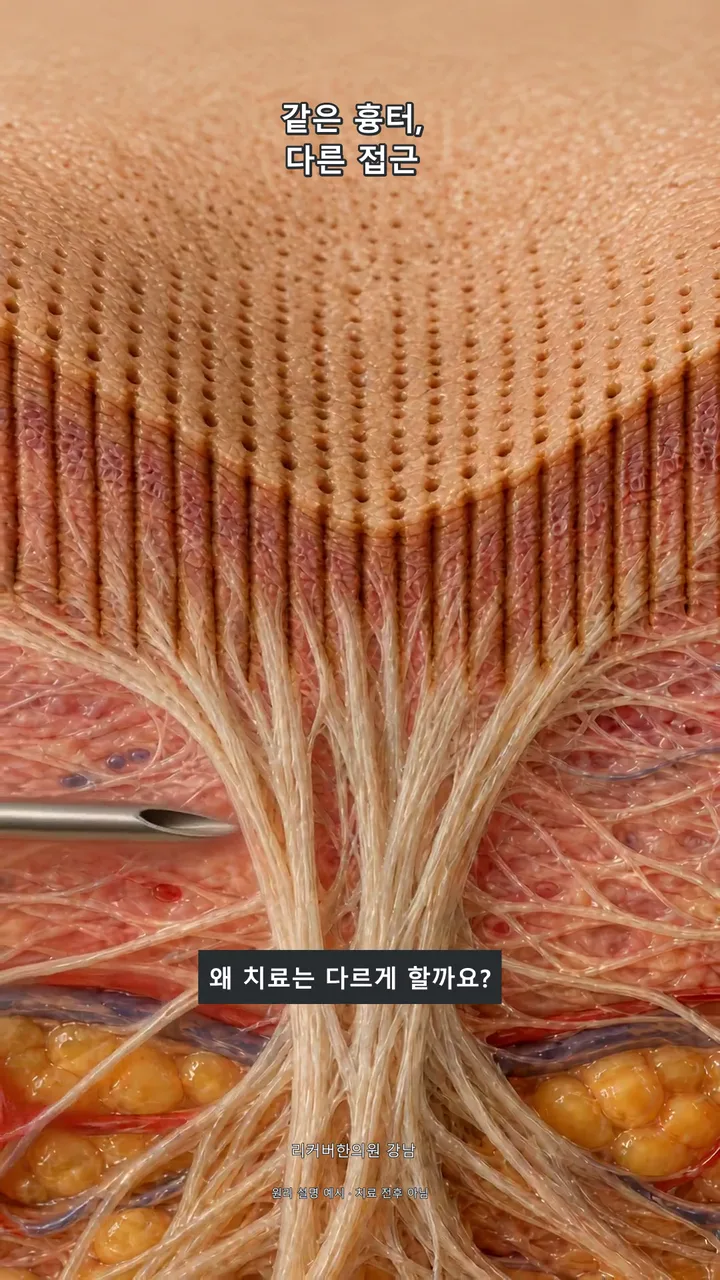
A fractional laser prompts collagen remodeling with fine heat, while Saesalchim focuses on releasing the fibrous tissue that holds the scar down. So before deciding what comes first, we check the scar's shape and tethering.
An explanatory example, not a specific patient's before-and-after. Redness or pigment change can follow laser, and bruising or swelling can follow Saesalchim.
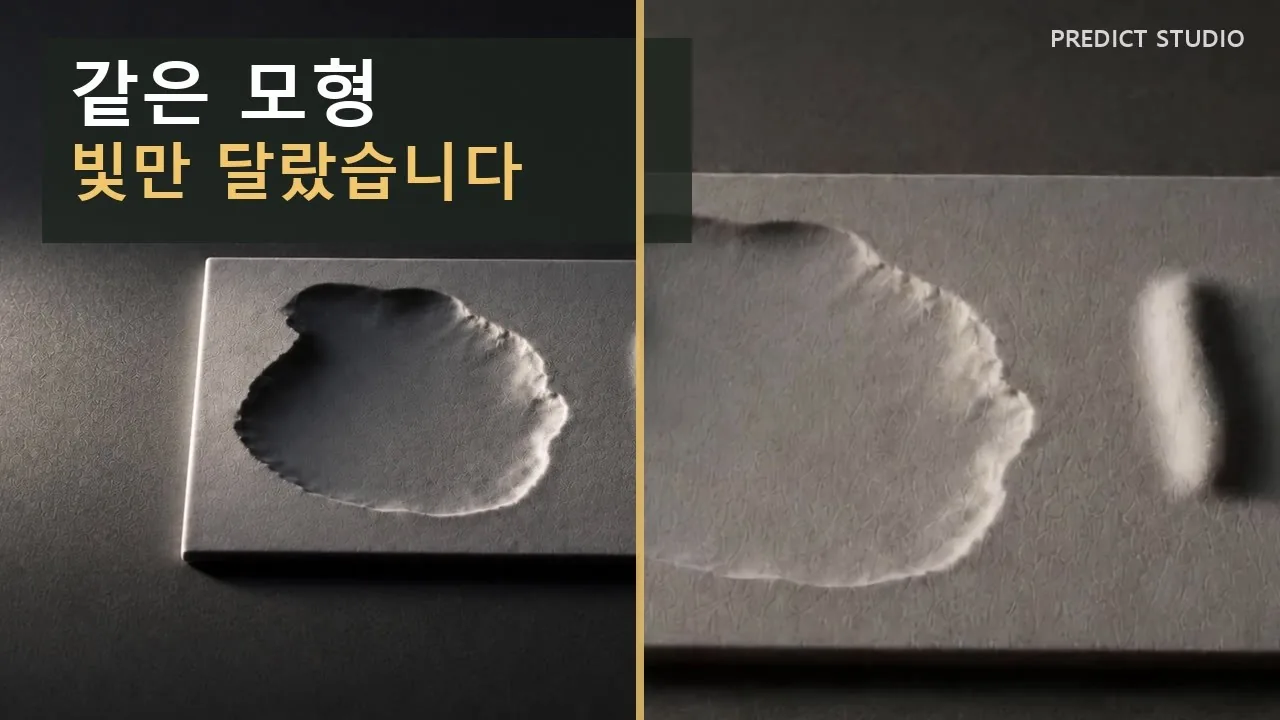
Why the same scar photo looks different — reading light, angle and capture conditions
With the standards in view, the next question is which depth and direction your own scars need.
RECOVER CONNECTION
Each broad question has one canonical page; focused journal and video records continue with narrower questions.